
The Most Undercoached Position in Junior Football
Walk past any junior training in Adelaide. The outfield players are doing drills. Getting coached. Improving. The goalkeeper? Standing at the far end, occasionally diving for shots someone else is practising.
This is the gap Mastery set out to fix. Goalkeeping is a specialist skill set — it needs dedicated coaching to develop properly. Without it, talented young keepers hit a ceiling early and stop improving.
Signs Your Child Might Be a Natural Goalkeeper
Not every child who wants to play in goal should specialise there — but some children have a genuine aptitude for the position. Signs to look for:
- Natural fearlessness: They happily dive for the ball and don't shy from physical contact
- Hand-eye coordination: They catch well and have quick reflexes
- Leadership instincts: They naturally organise and direct the players in front of them
- Focus under pressure: They perform better, not worse, when the stakes feel high
- Long concentration span: They can stay alert and focused during long periods of inactivity
If your child ticks most of these boxes, goalkeeper may genuinely be their best position — and specialist coaching will unlock that potential significantly faster than general football training.
When Should a Child Specialise?
This is a nuanced question. Our position at Mastery is this:
- Before age 8: No specialisation. Children should play all positions and develop all-round football skills. A goalkeeper who has never played outfield will always have gaps in their game.
- Ages 8–10: Introduce position-specific training alongside general outfield play. Children can begin attending specialist GK sessions while continuing to play in the field at their club.
- Age 10+: Genuine specialisation can begin. By this age, a child who consistently gravitates toward goal and demonstrates the natural attributes of a keeper can commit more fully to position-specific development.
The key principle: outfield skills make better goalkeepers. A keeper who can pass, control, and read the game from their outfield experience is a vastly more complete player than one who specialised at age 6.
What Quality Goalkeeper Coaching Actually Looks Like
Good GK coaching goes far beyond shot-stopping. A quality program will cover:
- Handling: Catching technique, grip, positioning of hands for different ball heights
- Footwork: Set position, lateral movement, coming to cross positioning
- Distribution: Accurate throwing (overarm, underarm, roll), goal kicks, distribution with feet
- Decision-making: When to come for crosses vs. stay on the line, when to come off the line to narrow the angle
- Communication: Organising the defence, calling for the ball, directing set pieces
- Mental skills: Recovery from conceding goals, maintaining concentration, managing pre-match nerves
If a GK training session is just a goalkeeper facing a series of shots, that's not specialist coaching — it's a shooting drill with a human target.
Why Goalkeepers Need Video Analysis
Video is especially useful for keepers because so much of what they do wrong is invisible in the moment. A keeper who consistently stands two metres too far from the near post won't notice it on the pitch — but they'll see it immediately on video. At Mastery, video analysis is a core part of our Goalkeeper Academy for exactly this reason.
Adelaide's Only Dedicated Junior Goalkeeper Academy
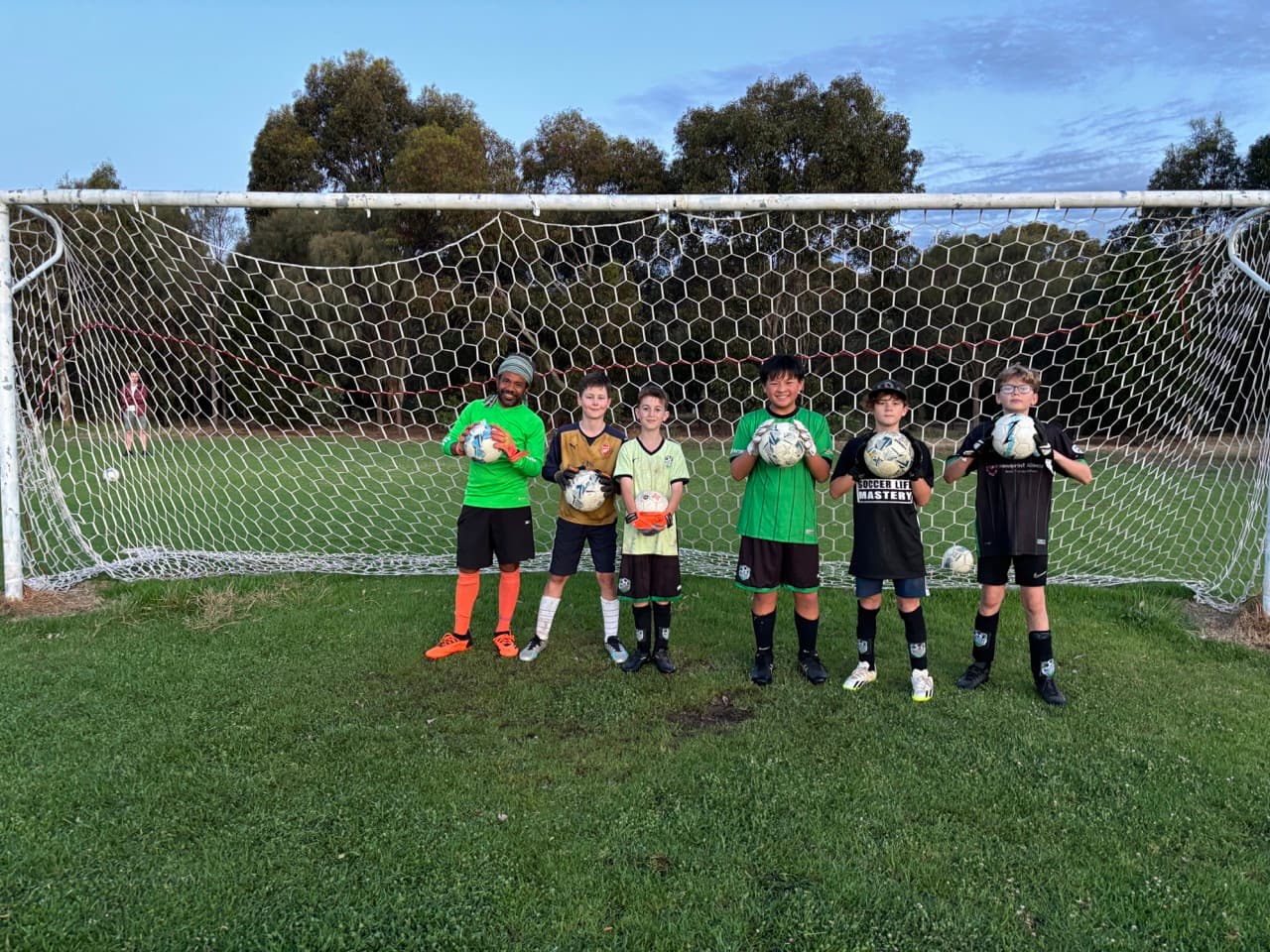
Mastery runs Adelaide's only dedicated junior Goalkeeper Academy — specialist GK sessions for players aged 5–16, every Tuesday at Parkside. The full technical and mental curriculum of modern goalkeeping. Specialist GK coaches only.
If your child is serious about the position, come and try it free for two weeks.